
The top complaint about tow service is silence
November 10, 2026Cold mornings kill batteries. Do the jump right the first time
Road Service Report · Battery Pro
Winter is battery season. According to AAA, a battery loses about 30 to 35% of its power at 32°F and about 60% at 0°F. During one January storm, a single AAA club area in Ohio logged nearly 3,000 calls in a day, and 43% of them were dead batteries.
What it means on the call
You are going to run a lot of jump starts this winter. Most will be routine. The ones that go wrong usually go wrong for the same reasons: a skipped inspection, a clamp in the wrong place, or too many cranks in a row. A jump done in the right order is faster, safer and less likely to fry a customer’s electronics.
The skill: the jump start sequence
Before you connect
-
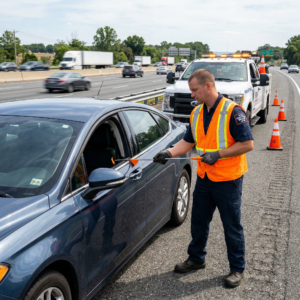
Amber lights on. Cones if you are on a highway. Walk the scene for leaks, smoke or collision damage.
-
PPE on: safety glasses or face shield, hi-vis vest, nitrile or rubber gloves, steel-toed boots.
-
Inspect the battery: no cracks, no bulge, no acid leakage, no swelling, and corrosion under 25%.
-
Check the vehicle type. Hybrid or EV? Orange cables mean high voltage. You work the 12-volt auxiliary battery only. Do not touch anything orange.
Connection sequence
-
Red to the dead battery’s positive.
-
Red to the good source’s positive.
-
Black to the good source’s negative.
-
Black to unpainted metal ground on the dead vehicle, at least 12 inches from the battery. Not the negative post.
Attempts
-
Let it charge 60 to 90 seconds with a pack, or idle the donor 2 minutes, before the first try.
-
Crank 3 to 5 seconds. Wait 30 seconds. Maximum of 3 attempts.
-
Three fails: stop, document, escalate.
Disconnect in the exact reverse order. Black from the ground point first, then black from the good negative, red from the good positive, and red from the dead positive last.
Know when it is not just the battery
Our Electrical System Awareness lesson teaches you to measure before you guess. Healthy charging at idle reads 13.8 to 14.8 volts. A battery under 12.4 volts at rest is discharged. Over 15 volts means the system is overcharging. If you suspect a cable instead of the battery, a voltage drop of 0.1 volt or less under cranking load is acceptable.
Stop work triggers
From the Battery Safety and PPE job aid, do not proceed if the battery is swollen, cracked, leaking, too hot to hold your hand near, or the vehicle has collision damage. If orange high-voltage parts are damaged or exposed, invoke stop work and call dispatch.
Talking to the customer
A winter jump is a good moment to be honest, not pushy. If the battery jumped but tested weak, tell the customer what you found in plain words and what it means for tomorrow morning. Our Battery Sales lesson uses simple result language: tested strong, early signs of failure, or failed the test. Let the customer decide. Never promise a battery will last, and never pressure.
Before you leave, confirm the vehicle runs with the customer present, tell them what you did, and invite one question. That last minute is often what they remember about the whole call.
Where to learn it
The jump start and electrical lessons are part of Roadside Service Procedures ($119.00). If batteries are a big part of your winter, Battery Service Specialist ($99.99) goes deeper on safety, testing, replacement and honest battery sales.
See Roadside Service Procedures · See Battery Service Specialist
Built for this call
Learn the full skill
Roadside Service Procedures
$119.00 · Finish it on your phone
Lockouts, jump starts, tire changes, and fuel delivery to a defensible professional standard.
Start the course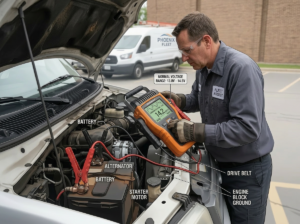
Battery Service Specialist
$99.99 · Finish it on your phone
Safe handling, testing, replacement, and the sales conversation, built for extreme heat markets.
Start the courseRunning a crew? Ask about one price for your whole roster.
Keep reading